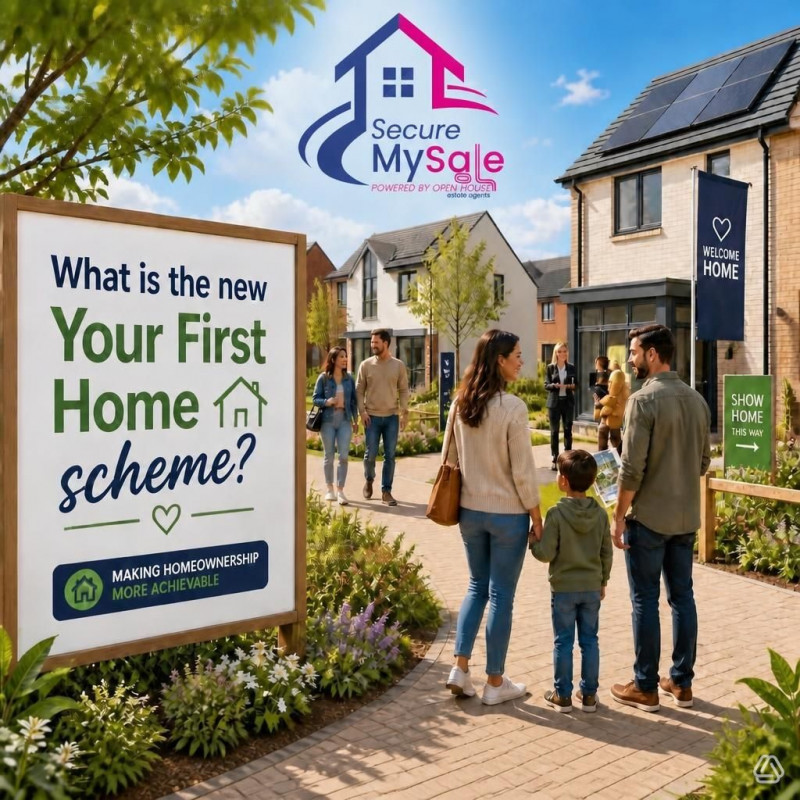
Could First-Time Buyers Purchase a New Build with a 2.5% Deposit?
A proposed government initiative could help eligible first-time buyers purchase a new-build home with a deposit of just 2.5%.
The proposed Your First Home scheme aims to make homeownership more accessible while supporting demand for newly built properties. However, key details—including eligibility criteria, regional price caps, costs and the launch date—are not expected to be confirmed until the next Budget.
How could the Your First Home scheme work?
Under the current proposals, eligible buyers would provide a deposit of at least 2.5% of the property’s purchase price. This could be combined with a government-backed equity loan of up to 20% of the property’s value, with the buyer taking out a mortgage for the remaining amount.
For example, on a qualifying new-build home priced at £250,000, the funding could potentially be:
- Buyer’s 2.5% deposit: £6,250
- Government equity loan of up to 20%: £50,000
- Remaining mortgage requirement: £193,750
The government has indicated that the equity loan could initially be interest-free. However, the length of that period and any charges that may apply afterwards have not yet been confirmed.
An equity loan usually represents a percentage of the property’s value rather than a fixed amount. This means the amount repayable could rise or fall if the property’s value changes. Buyers should carefully review the final terms before committing.
Who could qualify?
The Your First Home scheme is expected to be available to eligible first-time buyers purchasing a new-build property from a participating developer.
The final scheme may include:
- Household income limits
- Local property price caps
- Restrictions on the type and value of property purchased
- Contributions from participating housebuilders
Regional price caps could be particularly important in areas with higher property prices. The full eligibility requirements are expected to be announced at the Budget.
What could the scheme mean for first-time buyers?
Saving for a deposit is one of the biggest barriers to homeownership. A 2.5% deposit could reduce the amount some buyers need to save and help them consider purchasing a home sooner.
The proposed interest-free period on the equity loan could also reduce initial borrowing costs. However, a smaller deposit does not necessarily make a property affordable.
Mortgage lenders will still assess:
- Income and employment
- Existing debts and monthly spending
- Credit history
- Mortgage affordability
- The property’s value and condition
Buyers must also budget for other costs, including conveyancing, surveys, mortgage fees, removals, insurance, service charges and ongoing maintenance.
Could there be disadvantages?
Some property experts have raised concerns that increasing buyers’ spending power while limiting the scheme to participating new-build developments could contribute to higher new-build prices.
Potential buyers should therefore compare a qualifying home with similar properties in the local area, including both new-build and existing homes. Factors to consider include:
- Location and transport links
- Property size and layout
- Build quality and specification
- Service charges and estate management fees
- Local amenities and schools
- Potential resale demand
- The price of comparable properties
The smallest deposit is not always the same as the best overall value.
What happens when the property is sold?
Buyers should understand how and when the government’s equity share would need to be repaid.
The final scheme rules are expected to explain what happens if an owner:
- Sells the property
- Remortgages
- Repays the equity loan early
- Moves to another home
A property purchased through the scheme will eventually be sold as a previously owned home. Its future value will depend on the local property market, condition, location and buyer demand.
As with any property purchase, prices can rise or fall, and there is no guarantee that the owner will recover the amount originally paid.
Should you wait for the scheme?
The Your First Home scheme could provide another route into homeownership, but it is not currently open for applications and its final terms have not been confirmed.
If you are considering buying in Grantham or the surrounding areas, it may still be worth exploring the options currently available. Depending on your circumstances, these could include:
- Low-deposit mortgage products
- Shared ownership
- Buying a more affordable existing property
- Purchasing in a nearby village or surrounding Lincolnshire area
- Government-supported homeownership options that are currently available
A mortgage adviser can explain how much you may be able to borrow and help you understand the potential costs and obligations linked to an equity loan.
Speak to Secure My Sale Estate Agents Grantham
If you are considering buying your first home, Secure My Sale Estate Agents Grantham can help you explore properties currently available in Grantham and the surrounding areas.
Our local estate agents can provide guidance on:
- First-time buyer properties in Grantham
- New-build homes and existing properties
- Local house prices and market conditions
- The home-buying process
- Arranging property viewings
- Finding suitable homes within your budget
Contact Secure My Sale Estate Agents Grantham on 01476825258 for more advice about buying a home, comparing local properties or understanding your next steps or to speak with one of our experienced mortgage brokers contact us HERE
The Your First Home scheme remains subject to government confirmation. Eligibility requirements, property price limits, costs and launch dates may change. Your home may be repossessed if you do not keep up mortgage repayments. Seek independent mortgage, financial and legal advice before committing to a purchase.